
Synthetic Insulation Guide: Types, Thermal Performance, Down Comparison, and Sustainable Material Selection

woman wearing down jacket in the snow
Choosing the right synthetic insulation is essential for winter apparel, outdoor wear, gloves, and footwear. Different insulation structures affect warmth, weight, moisture performance, washability, and garment construction.
From loose fill and wadding to down-like hollow fibers, today’s thermal insulation fabric options give brands more flexibility than ever. This guide explains how synthetic insulation works, compares synthetic insulation vs down, and explores how sustainable materials such as recycled PET and upcycled oyster shells are shaping the next generation of thermal apparel.
Two Main Forms of Synthetic Insulation: Loose Fill and Wadding
Synthetic insulation used in apparel can generally be divided into two construction formats: loose fill insulation and wadding. Although both are designed to create insulating air spaces, their physical structures affect garment appearance, manufacturing methods, and end-use performance.
Loose Fill Insulation
Loose fill consists of separate clusters or fibers that are inserted into garment compartments in a way similar to natural down. Common formats include:
- Ball padding
- Fiber clusters
- Down-like synthetic fibers
Because the fibers are not bonded into a continuous sheet, they can expand three-dimensionally and create a soft, lofty structure. This makes loose fill particularly suitable for garments designed to deliver a puffy appearance and down-like hand feel.
Common applications include puffer jackets, insulated coats, duvets, sleeping bags, and other products where visual loft is part of the design.
For product developers, loose fill can provide flexibility in adjusting the amount of insulation placed in individual chambers. However, garment construction usually needs to control fiber migration and keep the fill distributed evenly during wear and washing.
Wadding
Wadding, sometimes referred to as batting or sheet insulation, is manufactured as a continuous layer with a controlled thickness and weight. It can be supplied in sheets or rolls and cut according to garment patterns before being positioned between the outer fabric and lining.
This structure is particularly compatible with industrial apparel manufacturing because it can be:
- Cut according to pattern pieces
- Sewn or quilted into specific garment zones
- Produced in controlled weights and thicknesses
- Integrated efficiently into repeatable production processes
Wadding is commonly used in insulated jackets, gloves, footwear, uniforms, and other garments that require consistent insulation coverage.
The best format depends on the garment. A puffer jacket designed around a voluminous silhouette may benefit from loose ball padding, while a fitted insulated jacket may require sheet insulation to maintain a cleaner profile.
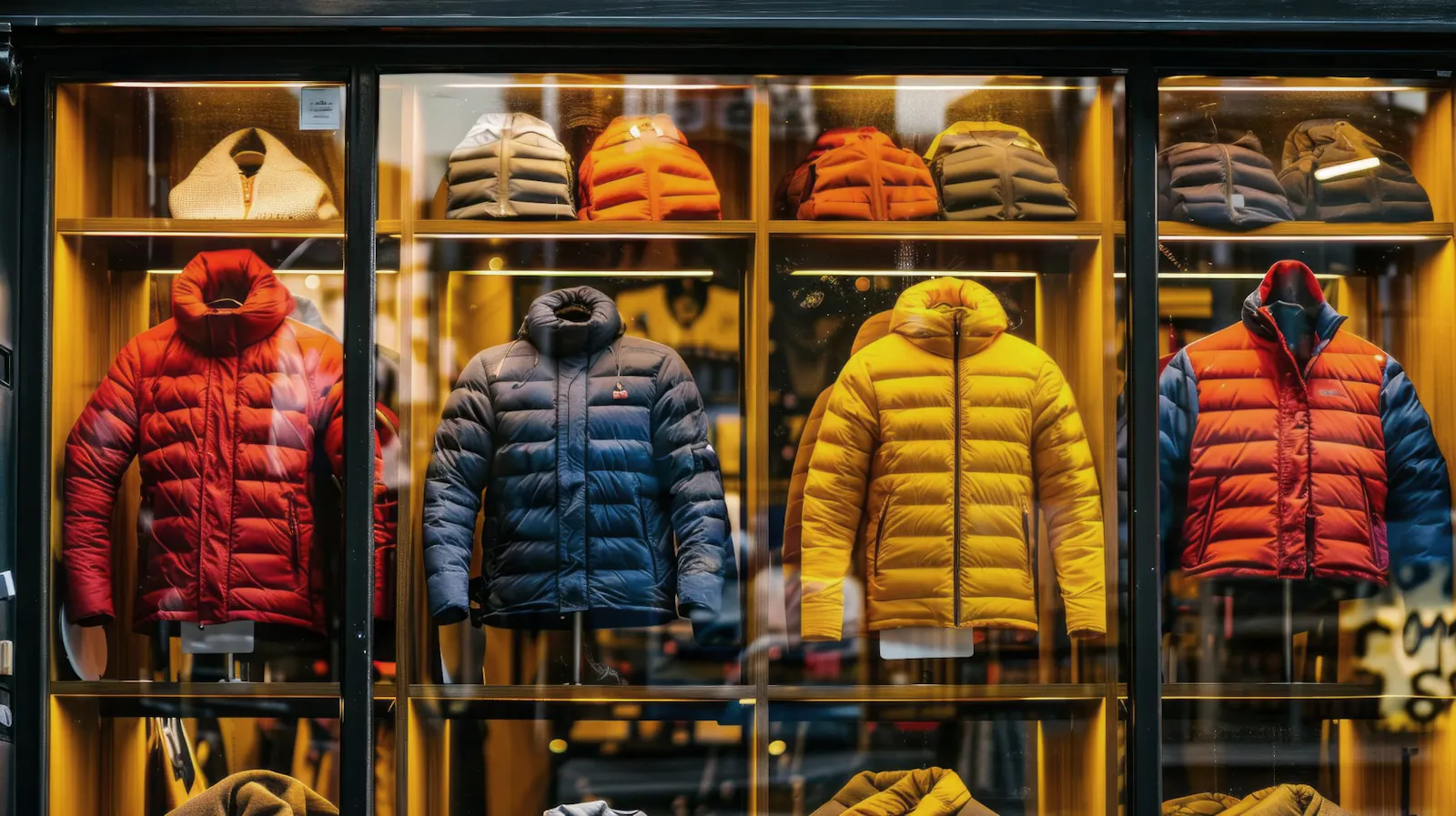
How Fibre Structure and Loft Create Thermal Insulation
The effectiveness of synthetic insulation depends not simply on the amount of fiber used, but on how those fibers create and maintain air spaces.
Air has relatively low thermal conductivity. By trapping relatively still air within the insulation layer, textile structures can reduce the rate at which body heat is transferred to the colder external environment.
This principle explains why loft is one of the most important characteristics of a thermal insulation fabric.
Loft and Trapped Air Layers
When insulation fibers expand, they form thousands of small spaces between individual filaments. These spaces hold air and create a barrier between the wearer and the outside environment.
Greater loft can create more insulating space, but simply making a material thicker does not automatically guarantee better garment performance. Fiber density, construction, compression, moisture, and the surrounding shell and lining fabrics can all affect thermal behavior.
This is why thermal performance should ultimately be evaluated using standardized test methods rather than appearance or thickness alone. ISO 11092:2026, for example, specifies methods for measuring thermal resistance and water-vapor resistance of textile materials and multilayer assemblies under steady-state conditions. ISO 11092:2026 textile thermal-resistance standard
Hollow Fiber Structures
Hollow fibers incorporate internal cavities within the filament itself. These cavities increase the amount of air that can be retained while helping control material weight.
For apparel developers, this structure can support a useful balance between:
- Thermal insulation
- Lightweight construction
- Loft
- Flexibility
Hollow fibers are therefore widely suited to applications where brands want warmth without unnecessarily increasing garment mass or bulk.
Spiral and Crimped Fibers
Instead of remaining completely straight, some synthetic fibers are engineered with spiral, curled, or crimped structures.
The three-dimensional geometry increases separation between fibers and creates additional spaces where air can be retained. Crimp can also help fibers recover after compression, supporting loft and resilience during repeated wear.
The resulting thermal performance depends on the complete insulation system. ASTM International's F1868-23 test method, for example, measures thermal resistance, evaporative resistance, and total heat loss for clothing materials and multilayer assemblies. ASTM also notes that factors including garment fit, drape, weight, and environmental conditions can affect how laboratory material results translate into actual clothing performance. ASTM F1868-23 testing standard
For B2B buyers, this is an important distinction: material specifications should be considered alongside garment construction and intended use.
Synthetic Insulation vs Down: Key Considerations for Product Development
The discussion around synthetic insulation vs down should not focus on identifying one universally superior material. Instead, brands should determine which option best matches their product positioning, wearing environment, care requirements, and cost strategy.
Warmth-to-Weight and Compressibility
High-quality natural down is widely valued for its strong warmth-to-weight ratio and ability to compress into a small packed volume before recovering its loft.
These characteristics make down particularly attractive for ultralight outdoor jackets, packable insulated garments, sleeping bags, and other products where reducing weight and storage volume is a primary design goal.
Synthetic alternatives continue to improve, but achieving similar loft may require a different fiber weight or garment construction depending on the insulation specification.
Performance in Damp Conditions
Moisture is another important consideration in synthetic insulation vs down.
When traditional down becomes significantly wet, its clusters can collapse and lose some of the air spaces responsible for insulation. Synthetic fibers generally maintain more of their structure when damp and typically dry more quickly.
As a result, synthetic insulation is often suited to garments intended for:
- Humid climates
- Variable weather conditions
- High-output outdoor activities
- Frequent washing
- Workwear and uniforms
That does not mean every synthetic fill performs identically. Fiber construction, density, shell fabric, quilting, and moisture management throughout the garment should all be considered during material selection.
Care and Product Maintenance
Synthetic insulation generally offers straightforward care characteristics. Many fills can be machine washed and dried without the specialized handling commonly associated with premium down garments.
This can be particularly relevant for uniforms, children's apparel, everyday winter wear, and rental or hospitality applications where garments may undergo frequent laundering.
Cost and Supply Planning
Natural down pricing can fluctuate according to origin, fill quality, availability, animal-welfare certification, and broader supply conditions.
Synthetic fills, by comparison, can be engineered to predetermined fiber dimensions, weights, and constructions. This gives manufacturers greater flexibility to establish repeatable specifications across production runs and can simplify cost planning for large-volume programs.
In practical product development:

The ideal choice therefore depends on the product brief rather than the material category alone.

From Thermal Performance to Sustainable Material Selection: Key Trends in Synthetic Insulation
Performance remains essential, but brands are increasingly evaluating insulation through another lens: where its raw materials come from and what resources are required to produce them.
Polyester continues to dominate global fiber production, which makes the transition from virgin fossil-based polyester toward recycled and alternative feedstocks particularly relevant for the textile sector.
According to Textile Exchange's Materials Market Report 2025, polyester represented approximately 59% of global fiber production in 2024. Recycled polyester accounted for roughly 12% of polyester production, and about 98% of recycled polyester was still derived from plastic bottles. Textile Exchange Materials Market Report 2025
For insulation developers, this creates opportunities to rethink material inputs while maintaining the functional benefits that synthetic fibers provide.
Recycled PET Insulation
Post-consumer PET bottles can be collected, processed, and converted into recycled polyester fibers for insulation products.
Using recycled feedstock can reduce reliance on virgin polyester while retaining properties that make synthetic insulation useful for apparel, including durability, washability, and the ability to engineer fiber structures for different insulation requirements.
Moving Beyond Bottle-to-Fiber Recycling
The next phase of sustainable insulation development is also exploring:
- Textile-to-textile recycled polyester
- Manufacturing waste
- Bio-based feedstocks
- Agricultural by-products
- Upcycled marine resources
These developments allow brands to consider sustainability not simply as a finishing treatment, but as part of the material architecture itself.
However, sourcing teams should evaluate sustainability claims alongside measurable factors such as recycled content, traceability, durability, production impacts, and relevant third-party certifications.
Long-lasting performance is also important. A low-impact material that quickly loses loft or must be frequently replaced may not deliver the same lifecycle value as insulation designed for repeated wear and laundering.
The direction of innovation is therefore toward thermal insulation fabric that can combine resource efficiency, durability, animal-free construction, and reliable insulation performance within one material system.
Matching Synthetic Insulation to Different Apparel Applications
There is no single ideal insulation specification for every garment.
Product developers should consider five key variables:
- Required loft
- Thickness
- Weight
- Performance when exposed to moisture
- Expected washing and maintenance conditions
These factors determine not only how warm a finished garment feels but also how it moves, fits, looks, and performs over time.
Puffer and High-Loft Jackets
For puffer-style jackets, visual volume is an important part of the product design.
Ball padding or down-like loose fill can create the soft, three-dimensional appearance consumers associate with conventional down jackets. Loose-fill constructions also allow designers to distribute different amounts of insulation across garment chambers.
Key priorities include:
- Loft
- Softness
- Warmth-to-weight performance
- Fill distribution
- Recovery after compression
Active Outdoor Insulated Jackets
For outdoor apparel designed around movement, manufacturers often need to balance warmth with mobility and moisture management.
Wadding can be particularly useful because insulation thickness can be selected and strategically positioned by body zone.
For example, greater insulation may be placed around the torso while lighter insulation is used around sleeves or movement-intensive areas.
This allows brands to engineer the garment as a thermal system instead of applying identical insulation throughout.

Gloves and Winter Footwear
Gloves and winter footwear present different challenges because the available internal space is limited.
Excessively bulky insulation can reduce finger dexterity, alter shoe fit, or create pressure inside a finished product.
Sheet-form thermal insulation fabric can be cut according to specific pattern dimensions and positioned between the outer material and lining. This gives manufacturers greater control over thickness and placement while maintaining consistent coverage.
Everyday Thermal Apparel
For commuter jackets, casual winter clothing, and other frequently worn garments, practical requirements such as washability, softness, shape retention, and repeated-use performance become particularly important.
A slim or evenly padded silhouette may benefit from wadding, while casual jackets designed around a softer and more voluminous aesthetic can use ball padding or other loose-fill systems.
The key is to start with the desired garment structure and working conditions, then select the insulation construction accordingly.
Smawarm for Different Apparel Constructions and Thermal Requirements
Smawarm is Creative Tech Textile's animal-free synthetic insulation solution developed using recycled PET and upcycled oyster-shell resources. It is designed to combine circular material use with engineered thermal functionality. Creative Tech Textile describes Smawarm as an insulation material built around air-trapping spiral fibers, with features including bacterial control, far-infrared emission, quick drying, and machine washability.
Hollow and Spiral Fibers for Thermal Performance
Smawarm uses hollow and spiral fiber structures to establish air spaces within the insulation layer.
The hollow structure increases the amount of air that can be retained within the material, while spiral geometry helps create separation between fibers. Together, these structures support loft, resilience, and thermal insulation while controlling overall weight.
Beyond insulation, the oyster-shell-derived material technology provides additional functional characteristics, including bacterial-control and far-infrared properties, according to Creative Tech Textile's product information.
Three Formats for Different Product Constructions
Instead of offering a single form of insulation, Smawarm is available in multiple configurations to support different garment-development requirements:
Ball Padding
A loose, three-dimensional filling designed for products requiring volume, softness, and a down-like silhouette. It is suitable for puffer jackets and other high-loft constructions.
Down-Like 1.5D Hollow
Fine hollow fibers provide a down-like filling option for brands seeking lightweight loft and softness without animal-derived down.
Wadding
Sheet-form insulation provides controlled thickness and consistent coverage for jackets, gloves, footwear, and other products requiring pattern-based cutting and industrial sewing.
Smawarm Wadding is available in eight specifications ranging from 40 to 250 GSM, allowing product developers to select an appropriate material weight according to garment structure, desired thickness, and insulation requirements.
For example, lighter GSM options can be considered for transitional jackets or areas where mobility is important, while heavier constructions can support winter garments requiring greater insulation.
This range allows sourcing and product-development teams to work backward from the application rather than forcing one insulation structure into every design.
Build the Insulation Around the Product
The right synthetic insulation depends on the product’s warmth, weight, moisture, care, and construction requirements. As brands look for more sustainable alternatives, recycled and upcycled materials are creating new ways to combine reliable thermal performance with responsible sourcing.
Smawarm offers multiple insulation formats to support different apparel applications while helping brands develop functional, animal-free, and more sustainable thermal products.
Looking for a thermal insulation fabric that can be tailored to different apparel constructions? Explore Smawarm and discover how recycled PET and upcycled oyster-shell technology can support your next winter apparel, outdoor, glove, or footwear project.
Oyster Tech Knowledge
Understanding the culture, science,
and future of oyster textiles.
Down vs Down Alternative: A Complete Guide to Materials, Performance, and Sustainable Insulation
2026-09-25
The Complete Guide to Sportswear Fabrics: Choosing the Right Material for Comfort and Performance
2026-01-28

Odor Resistant & Control Fabrics: How Innovation Keeps Clothing Fresh and Sustainable
2026-01-28
In the Media
Stories in Every Shell
Every year, over 160,000 tons of oyster shells are discarded along coastlines, while the textile industry faces growing pressure to address waste and sustainability. Seawool® transforms this challenge into opportunity—upcycling oyster shells and recycled plastics (RePET) into high-performance fibers.
Through wider media coverage, we hope to spark conversations and inspire a shared vision: transforming waste into resources, for people and for the planet.
For interviews, press images, or technical background, please contact: info@creativetechtextile.com
