
Exploring Thermal Fabrics: Innovations, Applications, and Global Suppliers
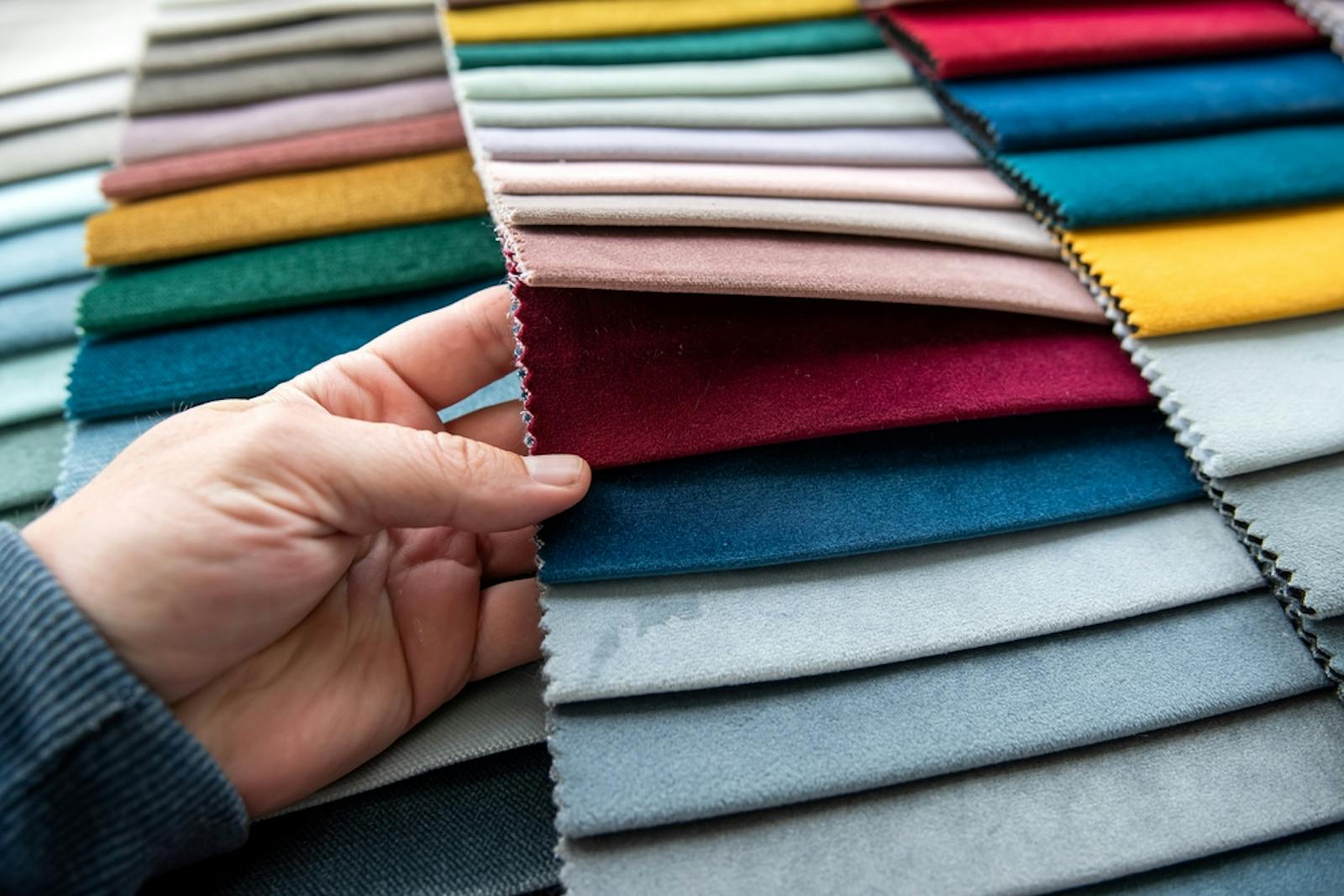
Understanding Thermal Fabrics and Their Functions
Thermal fabrics play a crucial role in winter wear, outdoor equipment, and performance apparel. Designed to retain warmth while maintaining comfort, thermal fabric solutions are engineered to manage heat, airflow, and insulation for a wide range of environments.
Heat-Retaining vs. Heat-Reflective Materials
Thermal fabrics generally fall into two categories:
- Heat-retaining fabrics: trap warm air close to the body (e.g., wool, fleece, brushed polyester).
- Heat-reflective fabrics: reflect body heat back toward the wearer through metallic or polymer coatings.
How Thermal Fabrics Work
These textiles use a combination of:
- Insulation layers
- Micro air pockets that trap heat
- Energy reflection using surface treatments or reflective barriers
This blend of structure and material science enhances warmth while preventing overheating.
Key Performance Features
High-quality thermal fabrics should deliver:
- Temperature regulation: maintaining warmth without trapping excess heat
- Breathability: allowing moisture vapor to escape
- Comfort: remaining lightweight, soft, and flexible
These properties make thermal fabrics essential for winter sportswear, outdoor workwear, and technical performance clothing.
The Science Behind Thermal Fabric Technology
Innovations in textile engineering continue to elevate the performance of thermal fabrics. Today’s thermal fabric suppliers incorporate both traditional and cutting-edge technologies to meet global demand.
Radiative Cooling and Passive Heating Technologies
Modern thermal textiles use principles of:
- Radiative cooling: releasing heat through infrared wavelengths
- Passive heating: absorbing and retaining warmth without active energy input
These processes help regulate temperature naturally and efficiently.
Materials Commonly Used in Thermal Fabrics
Key components in thermal textile construction include:
- Polyester blends: lightweight, moisture-wicking, and durable
- Wool: naturally insulating, breathable, and odor-resistant
- Microfiber: soft and effective in creating fine insulating layers
Advanced polymer coatings: enhancing heat reflection and wind resistance
Innovations in Temperature-Adaptive Textiles
Recent breakthroughs include:
- Smart fibers that expand or contract based on temperature: For a deep dive into high-performance insulation that mimics natural thermal regulation, see our guide on Smawarm®: The Future of Sustainable Thermal Tech
- Nanotechnology-based coatings that block wind while maximizing thermal efficiency
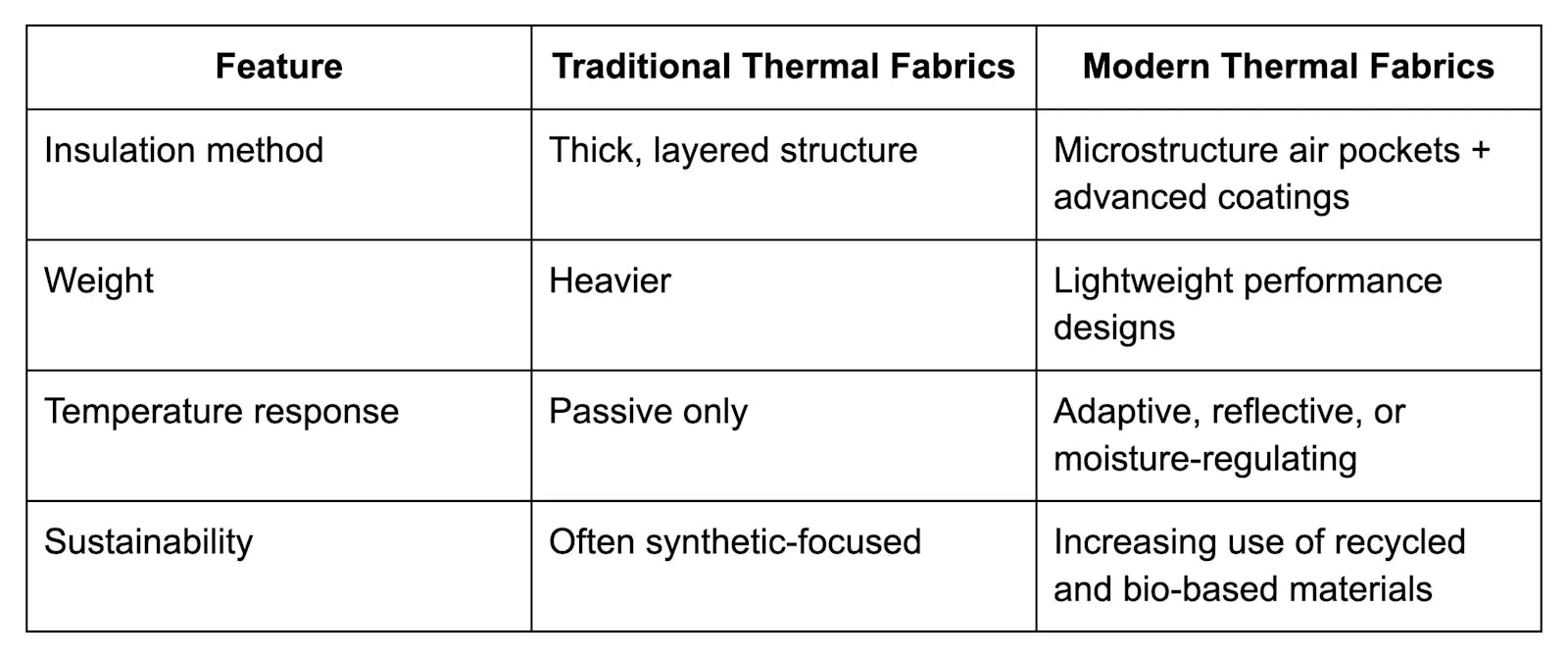
Traditional vs. Modern Thermal Solutions
How to Choose the Right Thermal Fabric Supplier
Selecting the right partner ensures product reliability, regulatory compliance, and performance consistency.
Supplier Evaluation Checklist
- Certifications: Does the supplier hold globally recognized standards like OEKO-TEX® Standard 100, Global Recycled Standard (GRS), or ISO 9001?
- Minimum Order Quantity (MOQ): Can they accommodate small-batch high-performance runs (Prototyping) as well as mass-market volume?
- In-House Lab Testing: Do they provide verified data on Clo values, R-values, and moisture vapor transmission rates (MVTR)?
- Technical Expertise: Do they offer specialty treatments like anti-pilling, moisture-wicking, or antimicrobial finishes alongside thermal properties?
- Lead Times & Logistics: Are they capable of maintaining consistent delivery schedules for seasonal winter collections?
Sustainable and Energy-Efficient Manufacturing
Leading thermal fabric suppliers increasingly adopt:
- Low-carbon production processes
- Water- and energy-efficient dyeing methods
- Circular and recycled material integration
This aligns with global sustainability requirements and reduces environmental impact.
Importance of Testing Standards
Reliable thermal fabrics are validated through:
- ASTM tests for insulation and heat retention
- ISO performance evaluations for durability, moisture management, and thermal resistance
These tests help ensure safety and consistency across winter wear, bedding, uniforms, and insulation materials.
Global Sourcing Trends
Today’s sourcing landscape includes:
- High-performance synthetic thermal blends dominating sports and outdoor wear
- Rising demand for eco-conscious alternatives (recycled polyester, bio-based fibers)
- Increased reliance on specialty technical suppliers in Taiwan, Japan, and Europe
- Growth in multifunctional textiles blending thermal control, odor resistance, and moisture management
Partner with Trusted Thermal Fabric Suppliers for Your Next Project
Whether you're designing thermal apparel, outdoor equipment, home insulation, or industrial protective wear, choosing the right thermal fabric is essential for performance, comfort, and long-term durability. Learn more about our thermal fabric solutions and supplier network.
Oyster Tech Knowledge
Understanding the culture, science,
and future of oyster textiles.

In the Media
Stories in Every Shell
Every year, over 160,000 tons of oyster shells are discarded along coastlines, while the textile industry faces growing pressure to address waste and sustainability. Seawool® transforms this challenge into opportunity—upcycling oyster shells and recycled plastics (RePET) into high-performance fibers.
Through wider media coverage, we hope to spark conversations and inspire a shared vision: transforming waste into resources, for people and for the planet.
For interviews, press images, or technical background, please contact: info@creativetechtextile.com
